
Two Tuesdays ago I appeared before a judge in the Upper Tier Tribunal (Information Rights) in Manchester Crown Court. Due to one or two procedural issues, the judge is seeking further information from all parties before this matter progresses, so not much to report really. I'd like to emphasise the importance of the Human Rights Act 1998 in particular Article 6 and the right to a fair hearing which was worth persisting with in this matter. And as I spent a ruddy age preparing my appeal, I think it's worth visiting some of the issues in hand.
The Overriding Objective
There's something called the 'Overriding Objective' which is not a form deterministic satellite navigation fitted to tractors in the Soviet era. The Overriding Objective is a set of rules that must be observed and applied by courts and increasingly by tribunals in the UK. For example, the court should ensure that 'parties are on equal footing', and 'deal with cases justly', ensuring that cases and matters are 'dealt with expeditiously and fairly'.(1) Why is this important? Let's explore (in matters Duke pertaining to FOI), the 'equality' at the heart of this matter, particularly the 'equality' in the resources of both sides. My former employer has vast financial resources to draw upon, and by its own admission has done so. My former employer has instructed a law firm to advise it in this matter. Senior managers at the University have access to advice from internal legal advisers. The University has trained staff who specialise in FOI matters. I have none of the above and I represent myself. Did the Information Commissioner and the First Tier Tribunal have this at the forefront of their minds prior to reaching their decisions?
Making an Appeal
 |
| A Peel |
Contra-Galileo
It has taken roughly the same time as it takes for the Sun to orbit our planet, for this current appeal to reach the Upper Tier Tribunal. It has its long, stubborn roots in the matter of several Freedom of Information requests I made to a Public Authority - the University of Salford-Manchester. For the sake of clarity and for the more befuddled afficionados of this blog, I'd requested this information through the Whatdotheyknow website in order to secure additional evidence for my Employment Tribunal claim of unfair dismissal. I'd lodged the claim at the ET in October 2009. Clearly, a far-sighted and diligent person would collate as much evidence as possible in order to build a foundation for a successful claim at the ET wouldn't they? The last thing a chap would want to do was waste the Tribunal's time. And as my former employer had alleged that the content of what I'd chosen to write about in those satirical Vice Consul's Newsletters was 'malicious', any additional evidence to corroborate and reinforce the allegations in the Newsletters would be useful for myself and useful to the Tribunal to help it inform its decision. Besides, it's a university and a PUBLIC AUTHORITY, and as such, receives the bulk of its funding from the state in one form or another. There's also a public interest in establishing precisely how our taxes are being spent by the University's Executive Committee.
The gatekeeper
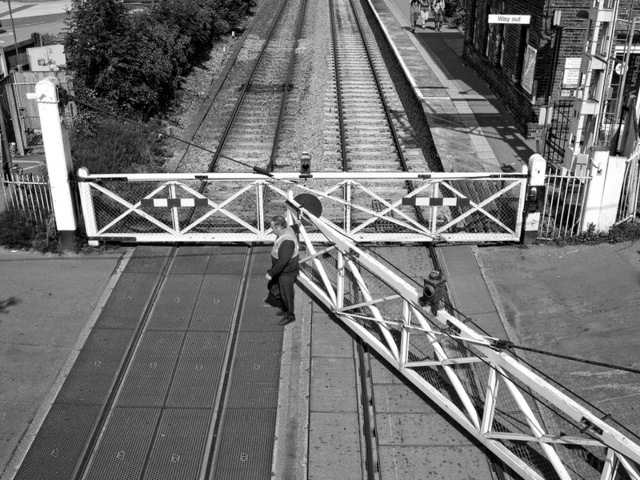
It is an eminently interesting state of affairs when the employer you are taking to an Employment Tribunal is the gatekeeper to information you wish to access for the proceedings. The 'interesting' factor is raised by the power of six when such information legitimately requested is denied and your requests refused as 'vexatious', a position subsequently upheld by (after lodging your complaint to) the Information Commissioner. Titillation levels almost go through the roof when one is provided with a large number of documents by your former employer and the Information Commissioner under three Subject Access Requests, particularly an email from the fingertips of the University's second-in-command Dr Adrian Graves, that suggested in November 2009 (just after a chap had made several requests for information) that the University would be treating 'any' of my FOI requests as vexatious. I wondered what a reasonable person might think. Would s/he conclude that this indicative that it is the requester that is being deemed 'vexatious' and not the requests? Yet despite providing such evidence to the Information Commissioner, this chap decided not to uphold my complaint.
Appeal number one
Of course I'd appealed this to the First Tier Tribunal. During the 'papers only' hearing, the FTT decided in its wisdom to uphold the decision of the IC which is odd. It's odd because in my application for a hearing, I'd specifically asked for an oral hearing to present my case to the First Tier Tribunal. Keen-eyed readers will also note that the FTT substantively elaborated on the IC's decision. I shall deal with this further in the next posting. I thought that this posting, given that Dr Graves has taken such a personal hand in this matter, and given the large boxes of documents provided to me by the University and the IC, it might be fortuitous to delve into the type and quality of some of the 'evidence' the IC (and later) the FTT relied upon in reaching their decision.
The gatekeeper
 |
| Not much gets past this chap |
Appeal number one
Of course I'd appealed this to the First Tier Tribunal. During the 'papers only' hearing, the FTT decided in its wisdom to uphold the decision of the IC which is odd. It's odd because in my application for a hearing, I'd specifically asked for an oral hearing to present my case to the First Tier Tribunal. Keen-eyed readers will also note that the FTT substantively elaborated on the IC's decision. I shall deal with this further in the next posting. I thought that this posting, given that Dr Graves has taken such a personal hand in this matter, and given the large boxes of documents provided to me by the University and the IC, it might be fortuitous to delve into the type and quality of some of the 'evidence' the IC (and later) the FTT relied upon in reaching their decision.
The cleverness of it all
The 'bubble' or 'relationship diagram' (or to give it its technical title, the Fortuitously Unabashed Cod-Kafkan Holistic Evidential Agency Determinator), is a wonderful thing to behold. Take the one situated at the head of this posting. To me, it's reminiscent of the map of the London Underground and serves a similar function - to confuse. I jest. It is of course designed with a simple end in mind: to help the reader/traveller/Information Commissioner negotiate what might on first view appear to be quite disparate terrain/linkages/relationships. Such a beautifully simple schematic has two purposes, one in the abstract and one in materiality: it can draw the intended recipient towards a desired outcome, helping plant in the mind of this individual the concept of coordinated actions/motivations/connections among specific individuals. If the bubble diagram achieves its aim, it fulfils this second function: to establish a very real officially sealed barrier to what might be useful information. What's immediately apparent, is that a certain chap of some physiognomal follicleness is placed at the heart of this pretty bubble diagram. I wondered why I wasn't placed at the extremities of this diagram? Then it dawned on me that such positioning could have the potential to make the esteemed Registrar look silly, as claims that I was at the far-left of a wider vexatious campaign would in all likelihood not cut any ICE with the IC.
Enter the campaigner
 What's particularly clever about this little diagram is that as I'm placed at the equivalent of Euston or St Pancras (top centre), it appears that I am linked with everyone in oval bubbles on the chart (even those with their names obscured) and thus extremely popular. I can state for the record that I personally know a lot of non-obscured people and I don't know a lot of obscure people. For the record I also personally know Stephen Kingston as he's interviewed me on several occasions for the investigative (and much under-valued) Salford Star. I also personally know Eric Longley. He's got a beard. He lives in Suffolk. It's on the record. Regular readers will recall with ease that this hirsute Suffolkian has acted skillfully as my lay-representative in many matters, such as Employment Tribunals, libel claims, and an internal appeal among others. Like myself, both Mssrs Longley and Kingston initially had their FOI requests refused. Unlike myself, both had their complaints upheld by the IC. The IC recommended the University release the information requested to both despite claiming that Eric was involved in the 'wider vexatious campaign' with me which is evidenced here:
"In relation to the further points that you make in respect of the University's decision to treat this request, as with the approximately 120 other linked and similar requests it has received, as vexatious, we would point out that in the majority of cases, including those from Dr Gary Duke, the ICO has decided that these are indeed vexatious... The University considers each request individually and has come to the view the five requests you submitted are vexatious and should be seen in the context of the use of FOIA requests as part of a campaign designed to cause harassment and distress to staff, in particular by the repeated implications that staff are guilty of a range of unacceptable behaviours whether corruption or bullying or ignoring legal responsibilities or similar. It has also taken into account the formulaic nature of your complaint and appeal which it is clear is simply a "cut and paste" intended to take up the time and effort of University staff with little regard to the relevance of the content..."(2)
Just how wide is wide?
Now I'm not quite sure why acting in a capacity as my unpaid representative or making bona fide FOI requests should label him a participant in a 'campaign' designed to harass and cause distress. It does provide a neat little rationale for refusing him information? Let's look at this sensibly. If I'd had lawyers representing me and they'd made use of the Whatdotheyknow website in requesting info from the University, would they be classed as being involved in a wider vexatious campaign against the University? At a conservative estimate it's a bit silly. But it set my mind on a collision course with a form of free thinking that was bound to throw up a question or two like how wide in absolute terms was this campaign? Did the University commission the services of external surveyors to determine precisely the extent of this alleged campaign or did they use in-house surveyors from the School of the Built Environment? Did they provide the IC with the measurements in easy to digest format?
I pondered more recent developments. If the IC had reached his decision on the grounds that Eric Longley and others were also involved within this campaign (as alleged by the University), given that three key people supposedly involved in this campaign had had their complaints to the IC upheld against the University, what did this now mean for the Information Commissioner's decision? In the eyes of any reasonable person, this alleged campaign would be seen as 'less wide' or in technical terms 'more narrowerer'.
Just what the doctor ordered?
Enter the campaigner
 What's particularly clever about this little diagram is that as I'm placed at the equivalent of Euston or St Pancras (top centre), it appears that I am linked with everyone in oval bubbles on the chart (even those with their names obscured) and thus extremely popular. I can state for the record that I personally know a lot of non-obscured people and I don't know a lot of obscure people. For the record I also personally know Stephen Kingston as he's interviewed me on several occasions for the investigative (and much under-valued) Salford Star. I also personally know Eric Longley. He's got a beard. He lives in Suffolk. It's on the record. Regular readers will recall with ease that this hirsute Suffolkian has acted skillfully as my lay-representative in many matters, such as Employment Tribunals, libel claims, and an internal appeal among others. Like myself, both Mssrs Longley and Kingston initially had their FOI requests refused. Unlike myself, both had their complaints upheld by the IC. The IC recommended the University release the information requested to both despite claiming that Eric was involved in the 'wider vexatious campaign' with me which is evidenced here:
"In relation to the further points that you make in respect of the University's decision to treat this request, as with the approximately 120 other linked and similar requests it has received, as vexatious, we would point out that in the majority of cases, including those from Dr Gary Duke, the ICO has decided that these are indeed vexatious... The University considers each request individually and has come to the view the five requests you submitted are vexatious and should be seen in the context of the use of FOIA requests as part of a campaign designed to cause harassment and distress to staff, in particular by the repeated implications that staff are guilty of a range of unacceptable behaviours whether corruption or bullying or ignoring legal responsibilities or similar. It has also taken into account the formulaic nature of your complaint and appeal which it is clear is simply a "cut and paste" intended to take up the time and effort of University staff with little regard to the relevance of the content..."(2)
Just how wide is wide?
Now I'm not quite sure why acting in a capacity as my unpaid representative or making bona fide FOI requests should label him a participant in a 'campaign' designed to harass and cause distress. It does provide a neat little rationale for refusing him information? Let's look at this sensibly. If I'd had lawyers representing me and they'd made use of the Whatdotheyknow website in requesting info from the University, would they be classed as being involved in a wider vexatious campaign against the University? At a conservative estimate it's a bit silly. But it set my mind on a collision course with a form of free thinking that was bound to throw up a question or two like how wide in absolute terms was this campaign? Did the University commission the services of external surveyors to determine precisely the extent of this alleged campaign or did they use in-house surveyors from the School of the Built Environment? Did they provide the IC with the measurements in easy to digest format?
 |
| Non-redacted evidence of an even wider obsessive campaign of time-series relationship forging |
Just what the doctor ordered?
You're probably at the point now where you're thinking "why the whining hair-based flaggard..." and internally fuminating whilst bawling into your long-suffering batman's suppurating side-head additions: "this Duke is clearly a rummy bugger.... 'tis beyond the formidable powers of Gray Skull to even consider that the IC will not have diligently considered all the evidence, as will have those learned and beyond reproach First Tier Tribunal types.... in the long shadow of Odin's knees, these chaps are professionals after all!"
Many documents also carried significant redactions (blacked out or obscured names and information). The names of those I was alleged to have been involved with in the alleged vexatious campaign had been redacted for reasons of Data Protection. A heavily redacted version of the above bubble diagram was also included in the documents I received from the University. The IC had also supplied me with a letter and documents sent to him by Dr Graves dated 22nd September 2010. I encourage readers to read this in its entirety before moving on.
 |
| A snippet from Graves' letter to the IC. Redactions courtesy of the University of Salford |
This thought-provoking letter and additional documents got me to thinking which is nearly always a bad thing. Firstly, I wondered why the second most important executive at the University such as Registrar Dr Graves would write directly to the Information Commissioner? Was it to add a certain authoritativeness to the University's case?
The accursed spot
Secondly, what was a 'blog spot'? My mind was pregnant with potentialities and in the eye of this mind, I pictured the aged hands of one-time dot-commers; where once lay unblemished skin stretched taught over long spindle-fingers, now in their forced retirement the rear-hand epidermis portrayed corruption, being highly barky and casually cankerous. Was it now so remarkably mottled with a myriad of brown nicotine-like stains, that innocent passers-by would put it down to prolonged exposure to low resolution reruns of Star Trek TNG on Virgin, overuse of unseasoned willow dowsing sticks and post-euphoric forms of victimless self abuse? But maybe the person who in professional terms is immediately subordinate to the Vice Chancellor was onto something? Did the facts and evidence confirm his claims?
A bell-end?
A 'wider campaign' must involve more than one person or it wouldn't be wide. It also has to not be narrow. His words 'former student and employee...' clanged around an empty cranial cavity like the harsh sound emitted by a misanthropic bell-end. It's bugger-luck that studying and teaching at Salford for a combined ten years has inevitably brought me into contact with more than one person. I blame the way universities are structured for this. As an eager undergraduate student, I found the possibility of regular zero-on-one kind of seminars had the potential to be remarkably convenient for a member of the teaching staff, but might ultimately lack educational value for a fledgling alleged vexatious requester. What's more, later, as a lecturer, it seemed however much I tried to avoid lecturing and teaching students they would always show up in the lecture theatres and seminar rooms demanding knowledge transference. There wasn't much I could do as I was contractually obliged to interact with them on a customer-service provider basis for which I was handsomely remunerated with money and a shared desk in an office on loan from someone on maternity leave.
Obsessed
Was there a deeper significance which on the eleventh reading I'd missed? Could it be that the very act of fulfilling my contractual duties almost fatalistically led to my involvement in this alleged 'wider obsessive campaign'? The evidence seemed to point that way. After all, my contract did say I was allowed to join a trade union. So I did. And being an active advocate of trade unions and having immersed myself within an academic trade union as a union rep at Salford, I found that despite my best endeavours, I kept coming into contact with sensient beings referred to in anthropological circles as 'colleagues', who could stand upright, sported opposable thumbs, could formulate rudimentary sounds into intelligible words, and produce within the dome-shaped thing located on the their necker-bones, abstract concepts. They also produced complaints. I'm laying my cards on the table here. I hadn't banked on this. At the outset, prior to joining the UCU, I did consider the alternative: combining by myself into an organisation with a membership ceiling of one. It wasn't long before I surmised that the utility of such an organisation would be severely hampered when it came to collective bargaining, and my language would regress.

The Sod's Law of trade unionism
I was worried that my continuing membership of the UCU might work against me in any future appeal. I was also angry with the trade union movement as a whole, particularly the Tolpuddle Martyrs. It's Sod's Law that trade unions campaign for and against things. The last thing I wanted when I joined the UCU, was to be a member of a trade union that actively fought for jobs and better working conditions. As an hourly paid part-timer on a yearly renewable contract, I was more than happy with not knowing if I was going to have a job come the new academic year. In my own mind, my membership wasn't premised on joining in acts of solidarity with other members with a common aim, but for the potential of singular actions of forlorn solitude. Any doubts I had were assuaged when I realised I would as a member, be entitled to take an active role in plying a bank account not of my own with my monthly subscriptions. All this and heaven too! Yet did I, by default, and through no fault of my own, become an unwitting campaigner for and against things? Could Dr Graves words be construed by a reasonable person and the IC to mean that my trade union activities were considered to be part of this 'obsessive campaign'.
Mea cuppa?
My union opposed the Project Headroom job cuts. By default and because of something called 'trade union democracy', so did I. Members of my union (also know as 'university staff') also helped organise and participated in demonstrations against job cuts. So did I. I was assured at the time that even if a senior manager read the out 1714 Riot Act from a hastily erected balcony on the first floor of the Ol' Fire Station, it was unlikely to carry much weight in a criminal court and wouldn't be acted upon by a draggle of pissed-up yet eager sabre-rattling yeomanry on horseback. Besides, we'd been assured that the European Convention on Human Rights guaranteed our right to freedom of speech and assembly. Moreover, as academics, we were allowed to drink tea, and speak out without fear of losing our jobs or privileges, weren't we? That's what it said in the University's Royal Charter.* Various UCU members of staff spoke at protests, wrote to the press locally, regionally and nationally, and spoke and wrote to councillors and MPs about the job cuts and other matters. I wondered if their names lay under the blacked-out sections on these heavily censored documents? What would the UCU have to say about this?
Invoking clarity
The impression I got from reading his letter to the IC was that Graves seemed to frown heavily on my involvement in such things. Would it not have been better if it simply stipulated in my contract precisely what I was allowed to do within my trade union and specify in what manner I could engage with liberal democratic process with a pen? It's no good the European Court of Human Rights handing down judgements that state that academics have the 'freedom to express their opinion about the institution or system in which they work' and can 'distribute knowledge and truth without restriction...' (3). Domestic UK contract law trumps the European Court of Human Rights every time when it comes to matters of Human Rights. It made me seriously consider voting UKIP at the next general election.

The width of a squared circle
But that wasn't all. Graves' words regarding student demonstrations also made me critically reevaluate what I'd been teaching international students for two and a half years. After all, many of them protested in my defence and organised a petition among their fellow students and staff after I'd been suspended in May 2009? Was I guilty of slipping it in through the back door?
Consider the evidence: I'd actively exposed them to a working knowledge of the Chartist movement and the wider campaigns for democracy between 1838-48. I'd plied them with a deep knowledge of the campaign against the tax on knowledge also known as the War of the Unstamped Press. Some may have become heady on the Womens' movement for emancipation and enfranchisement. How often did I and these young seekers of knowledge engage with the popular anti-fascist movements against Franco during the Spanish Civil War, the US Civil Rights movement in the 1960s, the anti-colonial movements in the Middle East, Africa and the Indian Sub-Continent, the social movements that recently exploded across Latin America, and imporantly the Anti-Vietnam War movement. Had my lectures on the Solidarity movement in Poland, the Hungarian and Czechslovakian Uprisings, the revolutionary movement in Iran which overthrew the US backed Shah, the Palestinian movement for liberation, the anti-Iraq War movements and the social movements that swept the former Stalinist states in Eastern Europe, been a bridge too far?
More importantly, did the evidence submitted by the University to the IC include photocopies of front pages from the Chartists' Northern Star and an A4 sized sample of the Peoples' Charter? Had my lecture notes been included? I held my breath as I searched the bundles of documents once more for a copy of my module outline. I breathed a sigh of relief. It wasn't there.

Off with his buttock

But Graves was right. I'd campaigned. I'd put pen to paper and signed it. I'd written to Ian Stewart who is an 'influencer'. He was my MP. Call me a fool, but I wanted him to lend weight to our campaign to save those 150 jobs. I didn't know it would be used against me as evidence. Maybe I should have written the letter to Mr Stewart anonymously? Could writing anonymous things be dangerous and end in a civil action? Yes, I'd signed that letter. Yes, I'd talked through a megaphone. Yes, I'd made posters advertising demonstrations. It was part and parcel of being an active trade unionist fighting to save the jobs of my colleagues. I thought because I worked in an institution that espoused enlightenment values that this would be fine and dandy. I wondered if Dr Graves had ever been on a protest against or for something?
Was evidence of a my being involved in a campaign to preserve jobs deserving of the opprobrium heaped upon my g
 |
| Can a megaphone lead almost inexorably to this? |
As I lay on the living room floor naked and exhausted, covered from head to foot in wode of the deepest hue, I surveyed the wreckage. Huge numbers of documents and correspondence from the University to the IC lay around me like so many unexploded cluster bombs after a precision raid by US Air Forces on a southern Afghan wedding party. I pondered the immensity of the undertaking. It must have taken an army of Infobots months of Bunyonesque perseverance to produce such a volume of refined and convincing arguments? Was the expenditure of £75,000(4) on staff costs alone on this case worth it? The result of such an investment and the
But something niggled me. It was this £75,000. I wondered how did they arrive at this figure and can I see the breakdowns? I wanted to know precisely how many people worked on it, how long they worked on it and if they used Quink-soaked styli or Bic pens? How much did Dr Graves' letter cost? Did he ask lawyers to give it the once over? More importantly, did he write it with a quill and was it sent by carrier pigeon on a 0.6 contract? How much were the legal fees in this matter? It's public money after all and don't we have a right to know?
As I stared out into the brilliant sunlight just beyond reach, I contemplated the University's original reasons for refusing my first two requests - that the costs of complying with the requests would exceed the £450 statutory limit...
* The Charter does not contain any provision for the protection of tea drinking. I made this up for sheer comedic impact.
(1) Sourced at http://worklifelaw.co.uk/2012/07/new-tribunal-rules-the-overriding-objective-and-the-sift/ and http://www.justice.gov.uk/courts/procedure-rules/civil/pdf/parts/part01.pdf
(2) Whatdotheyknow sourced at http://www.whatdotheyknow.com/request/freedom_of_information_requests_141#comment-26019
(3) see Sorguc v Turkey 2009,
(4) Justice Committee Post-legislative scrutiny of the Freedom of Information Act 2000, (page 116, 3.2.4) sourced at http://www.publications.parliament.uk/pa/cm201012/cmselect/cmjust/writev/foi/foi.pdf
Usual disclaimer: This work is and expression of opinion on a matter of public interest contains the opinions of the author. It is intended to report current events that are of public interest and public concern. The reproduction and use of any documents, photos and video images herein is to provide humour and accuracy in order to avoid civil litigation and claims of misquoting. In reporting current events they are used within the context of Fair Dealing or Fair Use. The author is happy to provide further acknowledgement if requested. To make any such request press here.
The author also suggests that before embarking upon expensive civil actions for libel, contact the author. We have reams of documentary evidence which we are happy to provide. A right of reply also operates. We are also happy to make corrections and if necessary provide an apology. So, to save £££sss please avail yourself of this opportunity if you really feel it necessary, which you can do by clicking here or by emailing garypaulduke@gmail.com


